
Esoteric Elements - The Qlipoth
The Shadow Side of the Kabbalistic Tree of Life

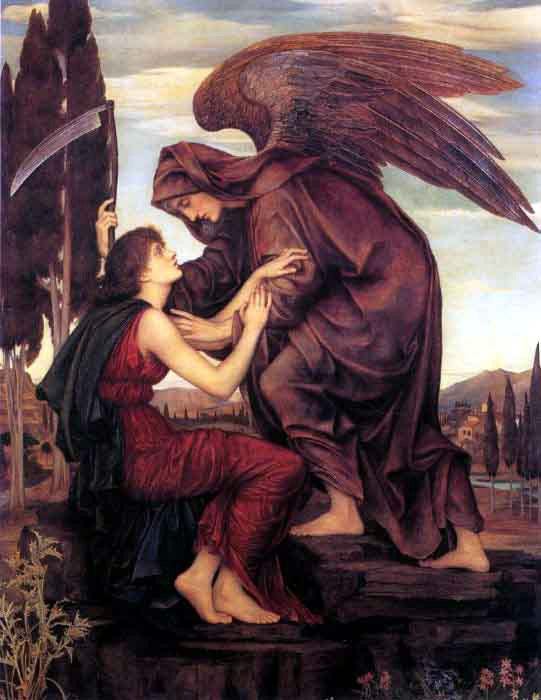
“The Tree of Death is the shell of the Tree of Life. As the light grows stronger, the shadows grow deeper.”
— Aleister Crowley
In the heart of mystical Kabbalah, the Tree of Life outlines the divine architecture of creation—a map of order, harmony, and spiritual ascent. Yet alongside this sacred structure exists its inverse: the Qliphoth, or Tree of Death. Far from being a simple representation of evil, the Qliphoth reflects a more complex esoteric truth—it is the necessary shadow cast by the divine light, the chaotic vessel that holds unbalanced power, and the path through which initiates confront, integrate, and transform their deepest darkness.
Known as Kelipot in Hebrew, meaning “shells” or “husks,” the Qliphoth are said to contain the remnants of earlier cosmic worlds—aborted realities and unstable forces expelled during the formation of divine order. The Qliphothic realms are populated by powerful and often fearsome beings, including Lilith, Samael, and their consorts, who play both adversarial and transformative roles in spiritual development. Human existence is said to mirror both trees, holding within it the divine and its distorted reflection.
This comprehensive article offers an immersive journey into the Qliphoth—from its earliest mystical mentions in the Zohar, through the writings of medieval Kabbalists, to the magical systems of the Hermetic Order of the Golden Dawn, Aleister Crowley’s Thelema, Kenneth Grant’s Typhonian tradition, and Thomas Karlsson’s practical Left-Hand Path. Here, you’ll find detailed insights into the spheres, spirits, and symbolism of the Qliphoth, as well as their relevance to modern esoteric practice, shadow work, and psychological initiation.
Prepare to descend the shadow side of the Tree, not to be lost within it—but to emerge from its depths with the hidden knowledge of balance, power, and spiritual awakening.
Foundations: The Shadow Tree
“Just as the flame casts a shadow, so too must the divine radiance birth a darkness in its wake.” — Eliphas Levi
The Qliphoth, from the Hebrew קְלִיפּוֹת (Qlippoth, Kelippot), meaning “shells” or “husks,” refers to the shadow side of the Tree of Life in Kabbalistic mysticism. These are the spiritual residues left behind during the emanation of the light, the chaotic fragments that were unable to contain the brilliance of the Ein Sof, the Infinite. While the Sephiroth reflect harmony, divine will, and ordered creation, the Qliphoth reflect imbalance, excess, fragmentation, and spiritual distortion.
The Qliphoth are not merely evil in the simplistic moral sense; they are the remnants of divine forces left unchecked, manifestations of judgment (Gevurah) without mercy (Chesed), severity without compassion. They are part of the cosmic drama of creation—necessary counterparts, not accidents. Without them, there would be no free will, no contrast by which righteousness or understanding could emerge. In fact, some esoteric traditions claim that the Qliphoth are the very tools by which the initiate refines their soul—confronting and integrating their own darkness in order to ascend.
In this mirrored cosmology, the Qliphoth forms an inverted Tree, one that reflects the Sephiroth but in corrupted or unbalanced forms. Just as each Sephira has its divine principle, each corresponding Qliphothic realm contains a distorted echo—an echo that tempts, torments, and ultimately tests the soul. The Qliphothic realms are often associated with demons, fallen angels, and impure spirits, but they are also seen by mystics as internal psychic states—the fractured parts of the human psyche and unconscious self.
Humanity’s role in this dual structure is critical. The physical world, Malkuth, is said to mirror both trees—the divine and the distorted—and in doing so provides the battleground for spiritual evolution. Earth is the nexus where divine light and Qliphothic shadow intersect. It is here, within the microcosm, that the macrocosmic struggle plays out. Humanity is not simply a passive observer, but a participant tasked with balancing the polarities, walking the path between severity and mercy, integration and chaos.
This foundational understanding sets the stage for the deeper mysteries that follow—the chronological emergence of the Qliphoth in Jewish mysticism, their evolution through various esoteric traditions, and their modern interpretations as a powerful framework for magical and spiritual work.
